TL;DR
- Five AI models estimated a first citation in 2–8 weeks, a stable lift in 2–6 months, and an authority shift in 6–12 months.
- These are model estimates, not results from a controlled study or promises for any campaign.
- Each AI platform uses different retrieval systems, so a page may appear in one platform’s answers before another’s.
- Track the same buyer questions on each platform over repeated runs; one citation does not prove a lasting lift.
- Use 30-, 60- and 90-day reviews to assess progress, not as deadlines for results.
GEO Timelines Vary Because Each AI Platform Searches a Separately Updated Index
A page going live does not put it into an AI model’s trained knowledge. That knowledge has a cutoff, so publishing new information does not change what the model learned during training.
A model can still cite a newer page when it retrieves information from the web to answer a question. The page must first be found and included in the search index that platform uses. Google, for example, says requesting a recrawl does not guarantee when a page will be crawled or indexed (Google's guidance on recrawling).
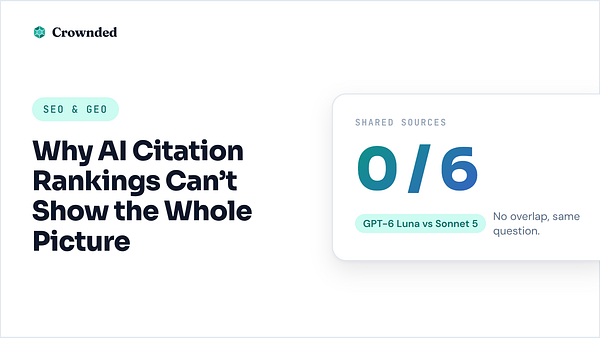
Each AI platform has its own retrieval setup and index, and those systems update on different schedules. A page may therefore be available to one platform before another. Even when two platforms search the web, they may not draw from the same index or surface the same pages.
That means the same page can become citable on one platform weeks before it appears in another platform’s answers. A delay on one platform does not, by itself, show that the page is poorly suited to GEO; it may simply not have reached that platform’s retrieval system yet.
Treat a GEO timeline as a range, not a date. The first citation depends on when a platform can retrieve the page, while a lasting change in visibility also depends on whether it continues to appear across relevant questions. Those are separate signals, so track them by platform rather than assuming one result applies everywhere.
Five AI Models Estimated 2–8 Weeks for a First Citation and 6–12 Months for Authority
The estimates point to three different stages of GEO progress, not one moment when a campaign suddenly starts working.
The test included GPT-6 Luna, Claude Sonnet 5, Gemini 3.5 Flash Lite, and Perplexity Sonar, alongside an earlier run on Gemini 3.1 Flash Lite. Five AI models gave the same rough answer: a first citation in 2 to 8 weeks, a stable lift in 2 to 6 months, and 6 to 12 months to shift authority on competitive topics. These are the models’ own estimates, not the result of a controlled study tracking campaigns.
A first citation is an early signal: a page appears in an answer to a relevant question. One appearance shows that a page can be surfaced; it does not show that visibility will last. Treat it as a prompt to check the answer again and see whether the page appears for other closely related questions.
A stable, measurable lift is a pattern that holds across repeated checks. The change should show up across more than one question or run, rather than hinging on a single answer. For a SaaS team, this is the point where a visibility trend may be useful in a review, even if it is still too early to call the work a lasting win.
Shifting authority is a deeper change than earning a citation. It means a platform starts treating your material as a trusted source on a competitive topic, rather than citing it now and then. That kind of shift takes more than getting one page into an answer: the source has to keep proving useful across the questions where buyers seek guidance.
The three bands help set different expectations for reporting. A first citation can tell you that a page has entered the conversation. A repeatable lift can support a view that the work is gaining traction. A change in authority is a longer-term outcome, and the estimates leave room for it to take much longer on crowded topics.
For planning, set a near-term check for signs of citation, then give the work more time before judging whether visibility holds or authority has shifted. Do not treat the first citation as proof of a lasting result, or the absence of one early on as proof that the work has failed. The test offers a rough planning frame, not a promise for any one site or campaign.
ChatGPT, Claude, Gemini and Perplexity Retrieve Pages Through Different Search Indexes
A page can be available to one AI search platform and missing from another because each retrieves web pages differently.
ChatGPT search can surface sites crawled by OAI-SearchBot. If your robots.txt file blocks that crawler, your site will not appear in ChatGPT search answers; check OpenAI's crawler documentation to confirm the access rules.
Gemini answers from Google’s index. Google says crawling can take a few days to a few weeks, and asking Google to recrawl a page does not guarantee that it will be included in the index.
Claude’s web search is reported to use Brave Search, but Anthropic has not officially confirmed that. Treat this as a reported connection, not a published statement from Anthropic.
Perplexity runs its own web search. Access to Google’s index, for example, does not by itself confirm that Perplexity can retrieve the same page.
Check crawler access separately for each platform before treating a missing citation as a content problem. Review robots.txt rules, make sure relevant pages return successfully to crawlers, and check server logs for visits from the platforms’ published bots where available. A rule that permits one crawler may still block another.
That check helps separate two issues: whether a page can be retrieved, and whether a platform chooses to cite it. Crawler access is a prerequisite, not a guarantee of visibility. If access is clear but citations remain absent, investigate the page’s usefulness for the questions you are tracking rather than assuming another platform’s results will transfer.
Measure GEO Progress by Re-Running the Same Buyer Questions on Each AI Platform
AI visibility needs a repeatable check because no Search Console equivalent lists every AI answer that mentions your site.
Start with a fixed set of buyer questions, such as the citation audit of 10–20 buyer questions. Choose questions your buyers might ask while comparing products, weighing options, or looking for advice. Keep the wording and question set unchanged during each measurement cycle.
Run the questions on each platform before you publish the pages you plan to assess. Save each answer with its date, platform and model, any cited URLs, and any brand mentions. This gives you a baseline to compare with later runs.
Repeat the same questions on a set schedule. Monthly checks can show whether visibility changes over time without making one answer carry too much weight. Save each new answer in the same format so you can compare runs question by question and platform by platform.
Track cited URLs and brand mentions in separate fields. A cited URL records a page the answer links to or names as a source. A brand mention records your company appearing in the answer, whether or not the answer cites your site. One does not prove the other.
Keep a few control questions unchanged and outside the main set. Choose questions that are not expected to relate to your brand or the pages you are testing. If their answers shift too, that can help you spot broad changes in platform behavior rather than changes tied only to your work.
For each check, record the exact question and answer, the date, the platform and model, cited URLs, and brand mentions. Do not count a brand mention as a citation, or a single citation as a lasting lift. Compare results across repeated runs, related questions, and platforms before judging progress.
GEO Milestones at 30, 60 and 90 Days: Early Signal, Repeatability, Interim Decision
Use 30, 60 and 90 days as review dates, not deadlines. Each check should answer a different question: is there an early sign, does it repeat, and is the work earning more runway? A missed signal on one date is a reason to inspect the evidence, not an automatic reason to stop.
At 30 days, look for signs that the work is moving, but do not expect a citation yet. The first-citation estimate runs from 2 to 8 weeks, so a page may still be within that window. Check whether the pages are accessible and whether any relevant answers have started to change; treat a first citation as possible, not required, at this point.
At 60 days, ask whether any visibility change holds across checks. The estimated window for a stable, measurable lift is 2 to 6 months, so this review can show an emerging pattern without proving that it will last. Compare results across the same questions and platforms, and look for more than one answer or run pointing in the same direction.
At 90 days, make an interim funding decision based on the evidence and the next milestone. By then, you may have enough repeated checks to judge whether the work is gaining traction, but competitive authority is estimated to take 6 to 12 months. A lack of authority shift at three months is not, on its own, proof that the investment has failed.
Tie the decision to what the team can show. If early signals are present and visibility is becoming more consistent, set a further review date and keep the work funded long enough to test that pattern. If the checks show no movement, review page access, the questions being tracked and the content plan before deciding whether to change scope or stop.
Keep the three dates fixed even if results arrive early or late. A review date prompts a decision; it does not set a promised result. That distinction gives a SaaS team room to assess progress without treating a model estimate as a delivery guarantee.
AI Platform and Index Updates Can Add or Remove a Citation Without Any Page Change
A citation can change even when the page stays exactly the same. Platforms refresh their retrieval systems and indexes on their own schedules, so a URL may become available to a system later, drop out of its results, or return in a later run.
A missing citation does not always mean the page has lost value. The platform may have changed which sources it can retrieve, or the answer may have drawn on a different set of results. That is one reason AI citation rankings change across models and runs.
Keep a dated record for each platform and URL you track. Note whether the page was cited, the question that surfaced it, and the date of the check. A record tied to a URL and platform helps separate a change in retrieval from a change to your page.
Run the same questions again after a platform update, where you can identify one, and after you change the page. Record the date of the update or edit alongside the next check. This makes it easier to see whether a citation change followed a platform shift, a page change, or neither.
Judge the pattern, not one answer. A citation that disappears once may return on a later run, while a single new citation does not show that visibility will hold. Look across repeated checks on the same platform before changing your content plan or calling a result lost.
Give GEO 2–6 Months for a Stable Lift Before Judging Its Results
Do not cut GEO funding before the work has shipped and had time to show a stable lift. First confirm the published pages address the buyer questions you chose to target. Then give the work the full stable-lift window before making a budget call.
A first citation is a useful signal, not a business outcome. It shows that a page appeared in an answer, but not that visibility is consistent or that it is helping the business.
Keep a longer runway for competitive topics, where changing how AI platforms draw on sources can take more time. If movement remains weak, check whether the work reached the right questions and whether the pages offer clear, useful answers before blaming the channel.
Judge the investment on shipped work and repeated evidence, not one early result.